
The Science of Color: Unveiling the Vivid Hues of Paraiba Tourmalines
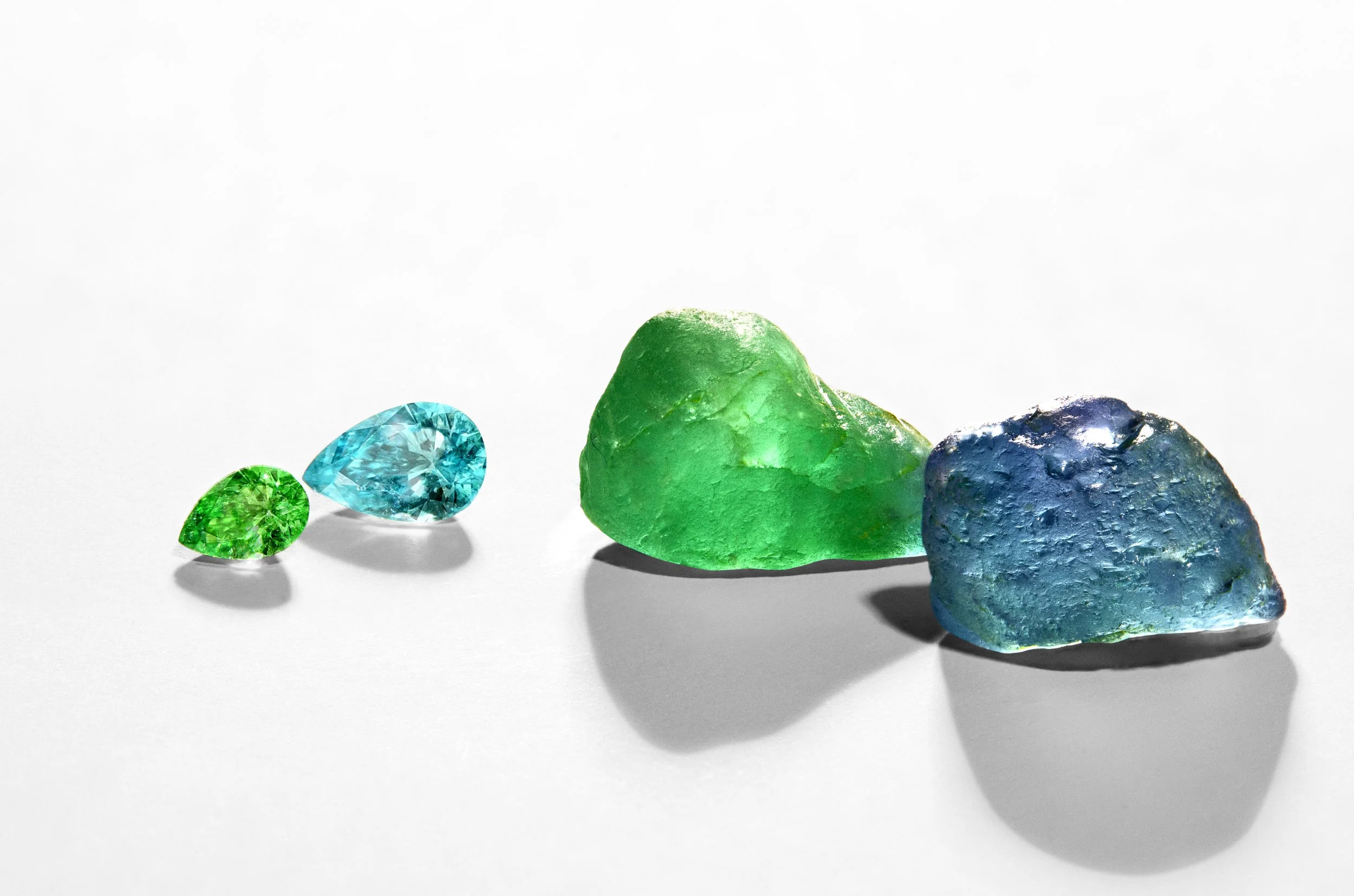
Mozambique Paraiba tourmalines are renowned worldwide for their mesmerizing colors that range from electric blues to lush greens. These rare gemstones are celebrated for their unique neon hues that seem almost otherworldly. This article delves into the science behind the vibrant colors of these tourmalines, exploring the role of trace elements in their formation, and discussing how gemstone inclusions can contribute to the dazzling array of colors seen in these precious gems.
The Role of Copper in Color Formation
At the core of the extraordinary allure of Mozambique Paraiba tourmalines lies the presence of copper, a trace element pivotal to their stunning neon hues. This element sets Paraiba tourmaline apart from other tourmaline, which derive their colors from elements such as iron, vanadium, or chromium. The copper content in Paraiba tourmalines is an extremely rare and distinctive feature, positioning these gemstones in their own unique category within the gemological spectrum.
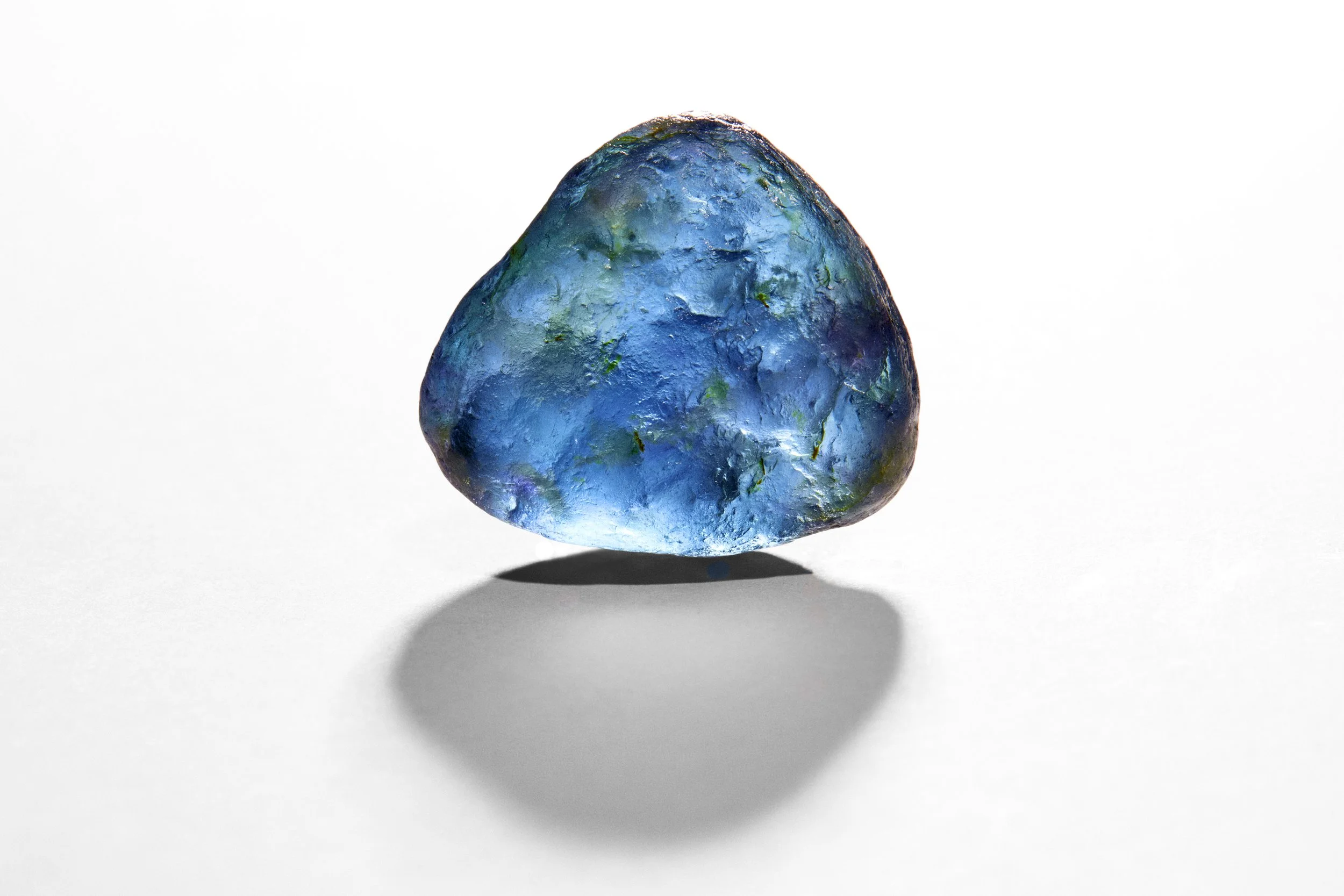
Copper’s role in coloring these tourmalines is both fascinating and complex. In the crystal lattice of Paraiba tourmalines, copper ions absorb portions of visible light, enhancing the emission of vibrant blue and green wavelengths. This process is not merely about the presence of copper but also its arrangement within the crystal structure. The way copper ions integrate into the tourmaline affects how light is absorbed and reflected by the gemstone, resulting in its signature glow.
The intensity and vibrancy of the color in Paraiba tourmalines are largely influenced by the concentration of copper. Higher levels of this element generally leads to a more intense blue coloration. The distribution of copper within the gemstone plays a critical role. Equal distribution of copper provides a uniform color across the stone, while variable concentrations can create fascinating color zones, adding to the stone’s unique visual appeal.
Green vs. Blue: The influence of additional trace elements
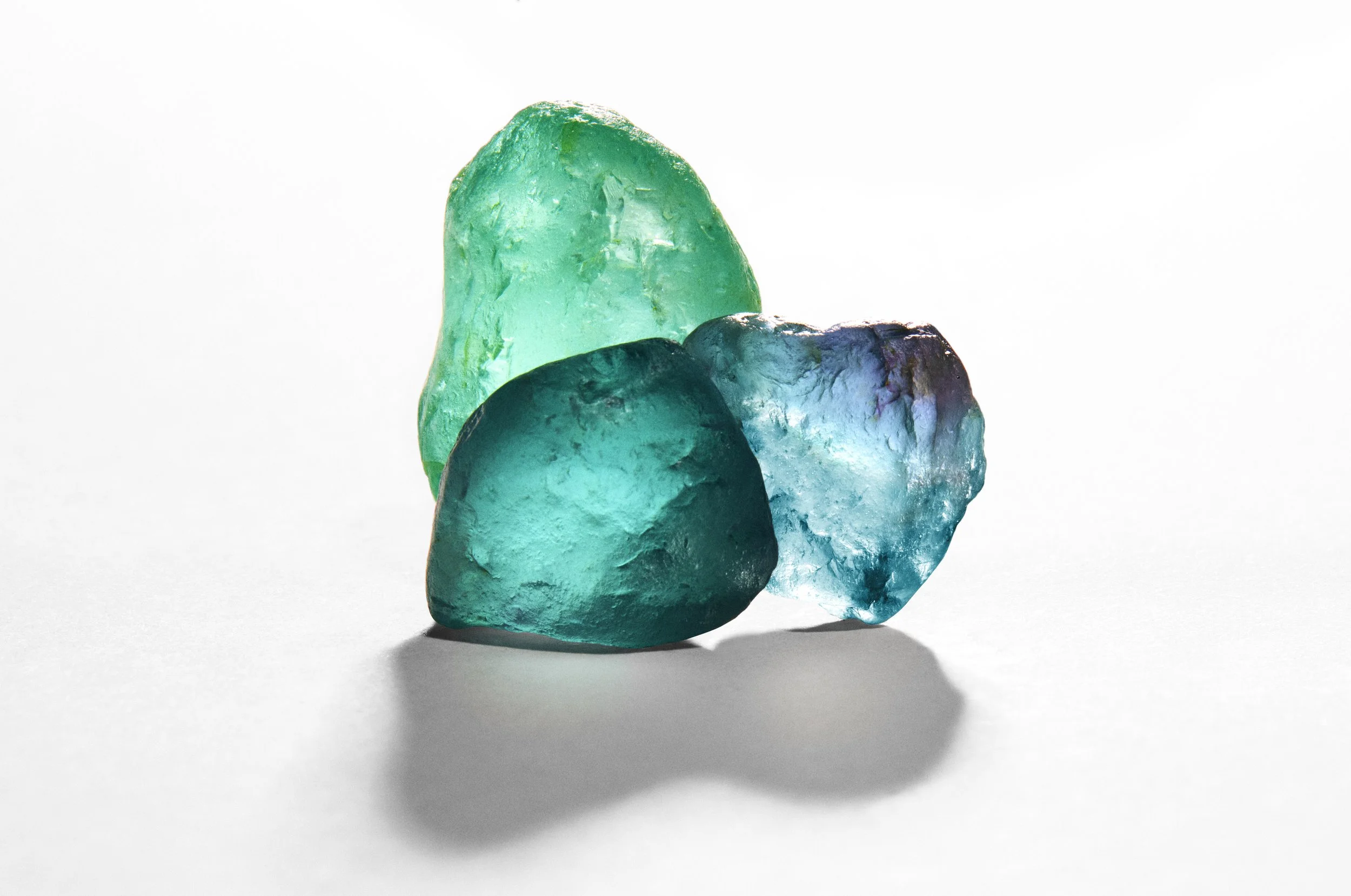
The interaction between copper, manganese and other trace elements within the tourmaline can further modify its color palette. For instance, slight variations in manganese content can introduce subtle shifts from blue to green, providing a broader spectrum of colors within individual stones. This interplay of elements makes each Paraiba tourmaline not only a reflection of its geological history but also a distinct piece of natural art.
Inclusions and Their Impact on Beauty
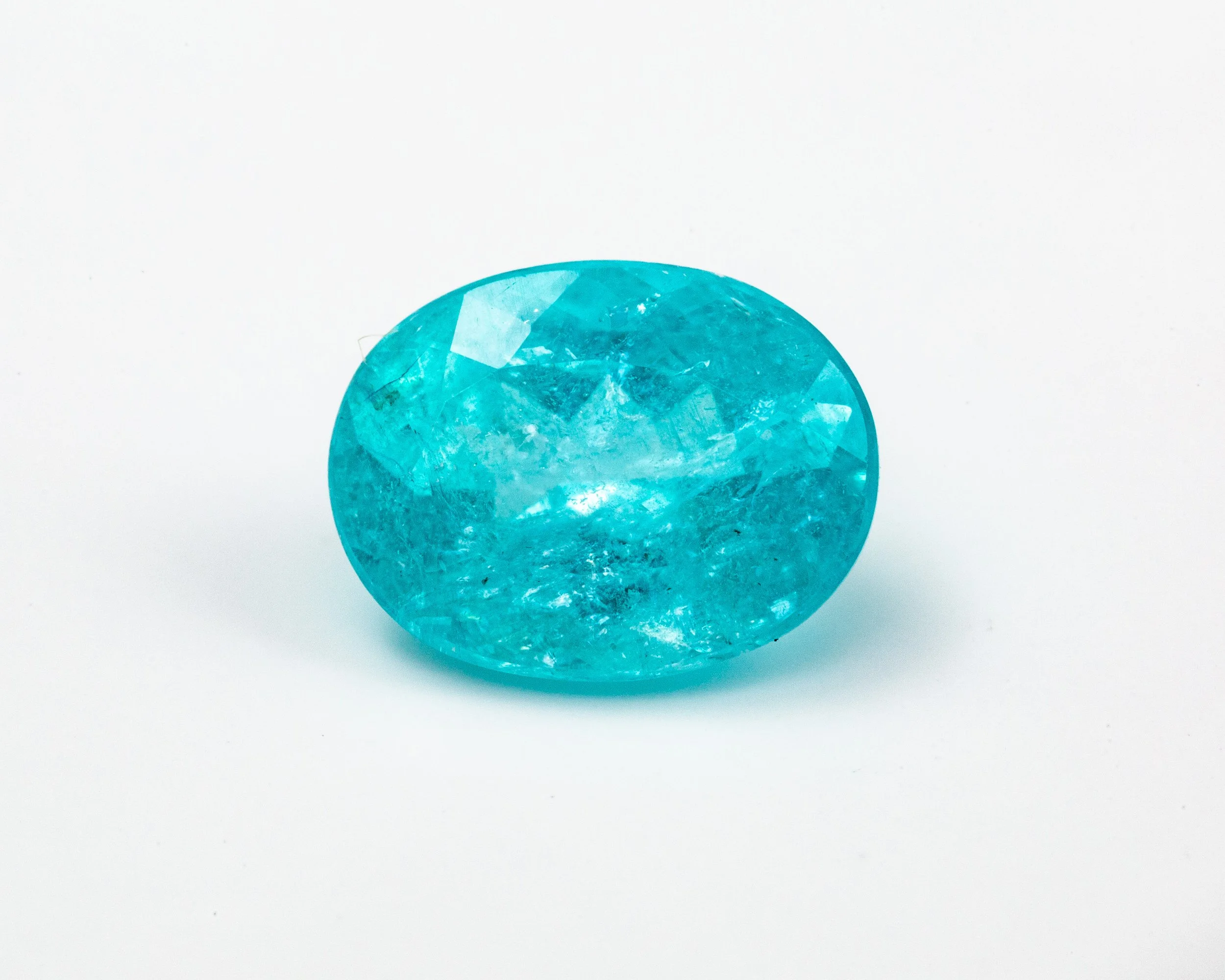
Contrary to common perceptions in the gem world, inclusions in Paraiba tourmalines can actually enhance their beauty and desirability. Inclusions, which are naturally occurring features such as microfractures, or cavities within the stone, can influence the way light is scattered and absorbed, adding depth and intensity to the gem’s color.
In some cases, inclusions create an internal play of light that can amplify the stone’s neon effect, making each included gem uniquely beautiful. Many Paraiba gemstones are so homogenously saturated with tiny inclusions that it creates a “stardust” effect. The light bounces within the stone in an endless number of directions creating a mesmerizing effect. While flawless gems are highly prized, Paraiba tourmalines with certain types of inclusions are sought after by collectors and connoisseurs who appreciate their contribution to the stone’s character and aesthetic appeal.
Every Paraiba Tourmaline Stone is Unique
Paraiba tourmalines are celebrated not just for their vibrant hues but also for the diverse range of colors and qualities they exhibit. These gemstones can display an array of colors from deep ‘windex’ blues and electric greens. This spectrum is a direct reflection of the unique geological environment in which each stone forms, shaped by a complex array of geological processes.
Copper is the primary element responsible for the neon blue and green hues that are characteristic of Paraiba tourmalines. However, other elements like manganese and titanium may contribute to the color diversity. These trace elements are incorporated into the tourmaline’s crystal structure during its formation, which occurs under conditions of elevated temperature and pressure deep within the Earth. The specific conditions such as the temperature gradient, the pressure levels, and the chemical environment surrounding the formation site significantly affect how these elements distribute within the stone. The variability in these conditions means that each Paraiba tourmaline is unique, with its own distinct color profile and quality.
The allure of Mozambique Paraiba tourmalines lies in their extraordinary color and the unique conditions under which they form. Understanding the science behind these colors not only enhances appreciation for these gems but also highlights the remarkable interplay of nature’s elements that create such beauty. The presence of inclusions and the variability in color and quality add layers of depth to the narrative of each stone, making Mozambique Paraiba tourmalines a true marvel in the gemological world.